

We spend a lot of time worrying about carbs, fats, and protein. We scan calories and check for sugar. But what if we have been looking in the wrong place? What if the real difference between a healthy diet and a dangerous one isn’t just about the nutrients, but about the processing?
That’s where the NOVA Food Classification System comes in. It is the tool that epidemiologists use to sort your groceries. It ignores the flashy marketing on the front of the box and looks instead at what happened to the food before it hit the shelf.
If you are a busy parent in Australia trying to eat cleaner, this framework changes everything. It draws a hard line between natural foods and ultra-processed foods (UPFs).
What is the NOVA Food Classification System?
In 2009, a Brazilian epidemiologist named Carlos A. Monteiro noticed something strange . Even as people ate less sugar and fat, obesity rates were still climbing. He argued that we weren’t just eating too much; we were eating food that had been “broken” by industry.
NOVA doesn’t care about the “recommended daily intake” of a vitamin. It cares about industrial processing. It is a simple lens: Would your great-grandmother recognise this as food? Can you make it in your kitchen?
If the answer is no, it is likely to be ultra-processed food.
The system sorts everything into four clear groups. It is the easiest and most respected way to separate real fuel from industrial products.
The Four Categories of NOVA
The magic of NOVA is that it acknowledges not all “processed” food is evil. In fact, Group 2 and 3 are essential for cooking.
Here is the definitive breakdown of the four groups, from best to worst.

NOVA Group 1: Unprocessed and Minimally Processed Foods
Definition: Foods obtained directly from plants or animals with only minimal processing such as drying, crushing, grinding, pasteurisation, refrigeration, freezing, and vacuum-packing.
Nothing is added to the original food. No salt, no sugar, no oil.
Common examples: Fresh fruits and vegetables, eggs, fresh or frozen meat and fish, plain milk and yogurt, plain nuts and seeds, rice, oats, lentils, chickpeas, dried beans, herbs, tea, coffee.
Processing allowed: Pasteurising, freezing, chilling, vacuum packing, fermentation (without extra ingredients), shelling, peeling, chopping.

NOVA Group 2: Processed Culinary Ingredients
Definition: Things taken from Group 1 foods or from nature. Pressed, refined, ground, or dried. These are not meant to be eaten alone. They are ingredients used to prepare Group 1 foods.
Think of an olive (Group 1) versus olive oil (Group 2). Like sugar cane is Group 1 and white sugar is Group 2.
Common examples: Olive oil, coconut oil, butter, lard, sugar, honey, maple syrup, honey, salt, flour, cornstarch.
Note: Group 2 items are not normally eaten alone. They become part of meals when combined with Group 1 foods. Cook rice (Group 1) with olive oil (Group 2) and salt (Group 2). That is still a whole meal. NOVA does not call it a processed food.

NOVA Group 3: Processed Foods
Definition: Group 1 foods plus Group 2 ingredients. Made through simple methods like canning, bottling, or traditional fermentation. Usually just two or three ingredients in total.
You can still recognise the original food. Canned beans look like beans. Cheese looks like something made from milk. The added ingredients are there to help the food last or taste better, not to transform it completely.
Common examples: Canned vegetables and beans (in salted water), canned fish (in oil or brine), traditional cheese, fresh bread (flour, water, salt, yeast), salted nuts, simple cured meats.
Note: Difference between Group 3 and Group 4 is when industrial additives are added. A bread made from flour, water, salt, and yeast is Group 3. A bread containing emulsifiers, dough conditioners, high-fructose corn syrup, and preservatives is Group 4.

NOVA Group 4: Ultra-Processed Foods
Definition: Industrial recipes with usually five or more ingredients. Many of those ingredients are not found in home kitchens. Little or no real Group 1 food remains. These products are designed to taste amazing, last forever, and cost little to make.
They contain ingredients that you would not typically find in a home kitchen. These include high-fructose corn syrup, hydrogenated or interesterified oils, protein isolates (such as soy protein isolate and whey protein concentrate), emulsifiers (including soy lecithin, carrageenan, and mono- and diglycerides), flavour enhancers (such as monosodium glutamate and artificial flavourings), colourings (including Red 40, Yellow 5, and caramel colouring), and non-sugar sweeteners (such as aspartame, sucralose, and acesulfame potassium).
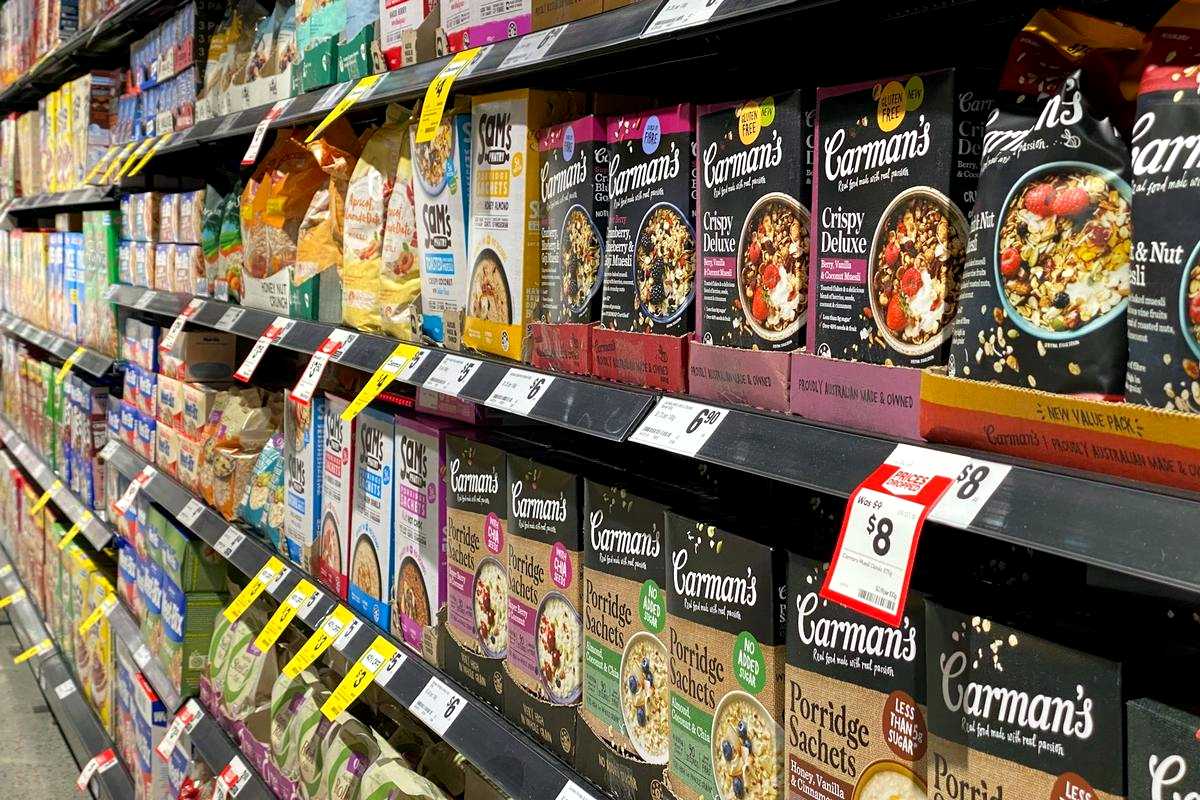
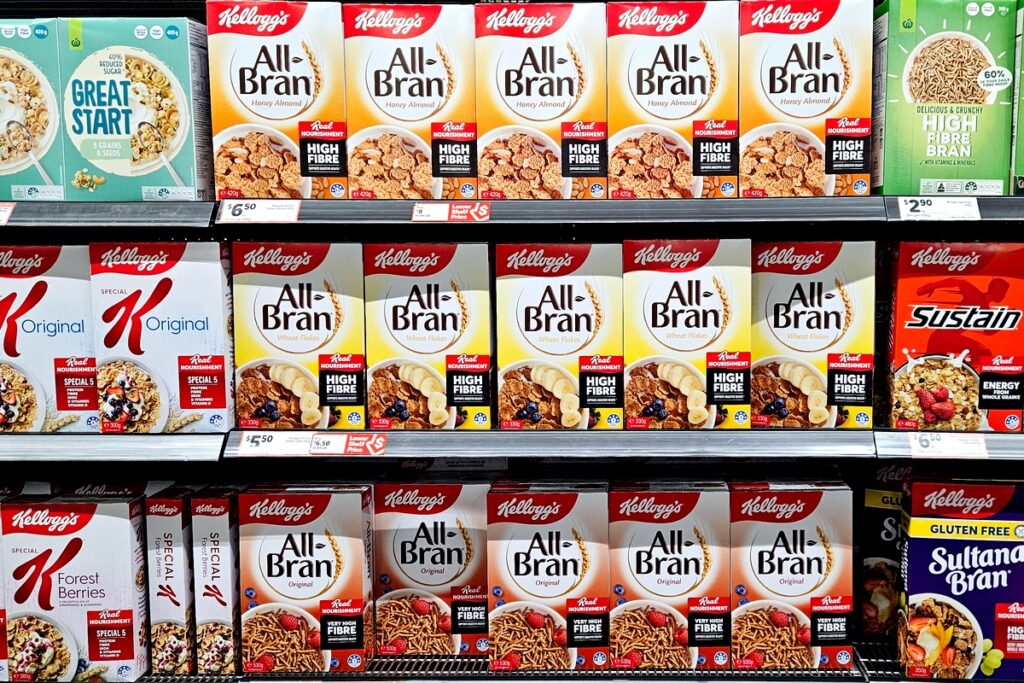
Common examples: Soft drinks, energy drinks, packaged chips, crackers, biscuits, instant noodles, chicken nuggets, sweet breakfast cereals, hot dogs, lollies, frozen meals with long ingredient lists.
Note: These products have longer ingredient lists, more additives, and industrial formulations that define NOVA Group 4.
Why ultra-processed food is a health risk
According to the scientific paper Ultra-processed foods and human health: the main thesis and the evidence, published in December 2025 published in the medical journal The Lancet, confirmed that the displacement of natural diets by ultra-processed foods is a primary driver of chronic disease.
Here is what happens when ultra-processed food makes up more than 20-30% of your diet:
1. You overeat without realising it. Industrial processing removes water and air, creating calorie-dense “fluff.” UPFs are usually soft and high in energy. Because you don’t have to chew much, your brain doesn’t get the signal that you are full until you have consumed hundreds of extra calories.
2. The matrix is broken. Imagine an apple vs. apple juice. The apple has fibre that traps sugar, releasing it slowly. Ultra-processed food has had that “matrix” destroyed. The sugar hits your liver instantly, spiking insulin and leading to fat storage.
3. Chemical cocktails. While Group 3 foods might just have salt and oil, UPFs contain emulsifiers, stabilisers, and artificial flavours. These have been linked to inflammation in the gut and changes to the microbiome.
4. Nutritional displacement. Every time you eat a protein bar or a diet soda, you are not eating a hard-boiled egg or a glass of water. High UPF consumption leads to lower fibre, fewer vitamins, and higher levels of toxic compounds.
Specific health outcomes linked to ultra-processed foods include: Obesity, type 2 diabetes, cardiovascular disease, high blood pressure, and depression.
Australian adults now get nearly half of their daily energy intake from ultra-processed foods.
The Natural Food Guide Verdict
Just because an ultra-processed food has fibre does not make it equivalent to a vegetable. Use NOVA as your primary filter, not your only rule.
- Rarely: Sweet biscuits, soda, nuggets.
- Sometimes: Fortified cereals, protein breads, plant milks (if you cannot tolerate dairy).
- Always: Group 1 foods.
Practical tips for the supermarket
How do you use this dense information in the 10 minutes you have to shop after work?
1. Ignore the front, flip the pack. The front of the box will scream “Natural” or “High in Protein.” Turn it over. If the ingredient list is a paragraph long and contains things you don’t have in your pantry (like “mono and diglycerides” or “soy lecithin”), it is ultra-processed food. Put it back.
2. The “three second” rule. Look at the ingredients list. If you cannot find three ingredients that are clearly Group 1 (like oats, water, salt) within the first three seconds, only buy it as a “sometimes” food.
3. Cook the ingredients, not the meals. Buy processed culinary ingredients (Group 2) like olive oil and salt, and natural foods (Group 1) like veggies and meat. Avoid buying “meals” (Group 4). A frozen pizza is ultra-processed; a bag of flour, cheese, and tomato sauce is dinner.
4. The “cheat” loophole. If you love bread, buy it from a local bakery (usually Group 3). If it is wrapped in plastic and sits on a shelf for two weeks without going stale, it has industrial emulsifiers (Group 4).
Conclusion
The NOVA Food Classification System is not a diet; it is a set of glasses that let you see food for what it really is.
The goal is all about sovereignty. By understanding the difference between a processed cheese (fermented milk, salt, enzymes) and an ultra-processed cheese slice (milk solids, emulsifiers, stabilisers, colouring), you take back control.
Focus on Group 1. Cook with Group 2. Enjoy Group 3 now and then. And treat Group 4 (ultra-processed foods) like something you cannot always avoid, but minimise your exposure to.
Now you know the definition of real food and industrial food chemistry. Eat well, enjoy food shopping and support your local community. Have you tried a farmers’ market recently?